Journal topics
- Art (60)
- From the Studio (44)
- Architecture (38)
- Graphic Design (37)
- Interiors (37)
- Illustration (32)
- Product Design (31)
- Photography (29)
- Fashion (11)
- Design Classics (9)
Café Daum Coat Stand: A Michael Thonet Design Classic
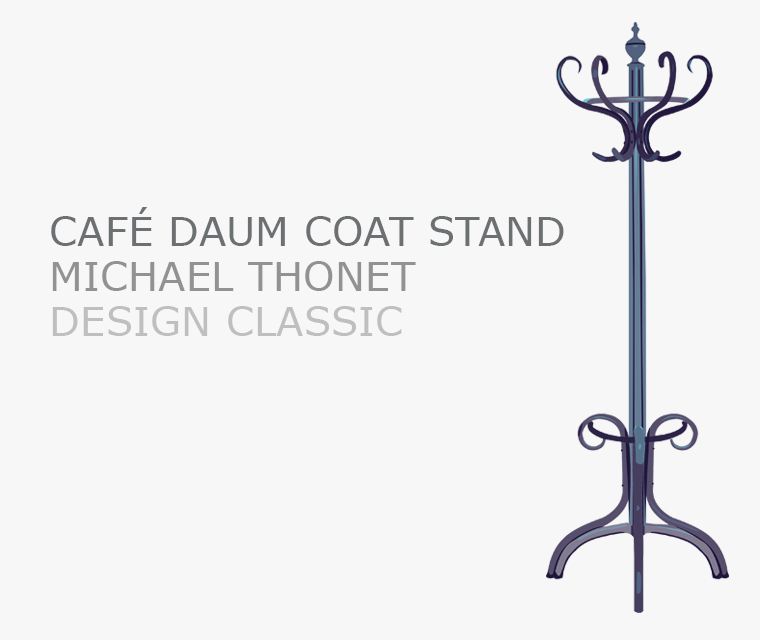
Let me set the scene. Imagine a smoke-filled café in Vienna, where politicians, statesmen and courtiers linger over coffee and conversation. It is 1849, and amongst the bustle is a deceptively simple piece of furniture designed to take care of all those coats, hats and umbrellas: Michael Thonet’s Café Daum coat stand.

When I first wrote about the coat stand for our newsletter back in 2017, I had recently visited Prague and sat in the kind of cafés I imagined Thonet designing for – places thick with conversation, where coffee was lingered over and you could quite believe a revolution might be plotted at the next table.
A design classic made for café life
The Café Daum coat stand dates from a pivotal period in Thonet’s career. After moving to Vienna, one of his first important independent commissions came from Anna Daum, owner of the fashionable Café Daum. The elegant coat stand is associated with that 1849 commission, alongside furniture for the café.
It is practical, of course, but look at those curves. Instead of hiding joints beneath heavy carving and decoration, Thonet was finding ways to let the material and the method of construction create the form. It feels remarkably light and modern for something conceived in the middle of the 19th century.

I have a soft spot for the coat stand for another reason. We had one in my childhood home – if not an original, then certainly closely inspired by one – in rich dark wood, tall and elegant like an indoor tree. I think I took it completely for granted, slinging my coat over those wonderfully curvaceous hooks.
Bending the rules
Michael Thonet had begun experimenting with ways of bending wood in the 1830s, looking for an alternative to the labour-intensive carving and joining traditionally used in furniture making. His big technological breakthrough came in the 1850s, when he perfected a way of bending solid beech using steam and a metal strap to stop the wood splitting.
That changed much more than the appearance of a chair. It allowed furniture to be broken down into standardised components and produced efficiently in much larger numbers. A new factory followed in 1857, and Thonet’s furniture began to demonstrate something we now take for granted: good design could be elegant, repeatable and affordable at the same time. The V&A has a fascinating account of the development of Thonet’s bentwood furniture.

From bentwood to industrial design
Thonet’s most famous café chair, the No. 14 of 1859 – now known as the 214 – distilled the idea brilliantly. A handful of components could be manufactured separately, packed efficiently and assembled after shipping. Thonet even managed to fit 36 dismantled chairs into a one-cubic-metre shipping crate.
It is this combination of simple parts, efficient manufacture and pared-back form that makes Thonet so important to design history. The company is now regarded as a pioneer of industrial design, with ideas that anticipated much of what Modernism would later embrace.
The principle carried on through later Thonet furniture too. The No. 209 armchair, introduced around 1900, reduced an elegant and almost sculptural form to just six parts. Its sweeping back and armrest are bent from a single piece of solid beech.

Thonet, Vienna and Art Nouveau
The earliest Thonet bentwood designs actually predate Art Nouveau, but those organic curves and visually light forms later found themselves perfectly at home in the cafés and interiors of turn-of-the-century Vienna.
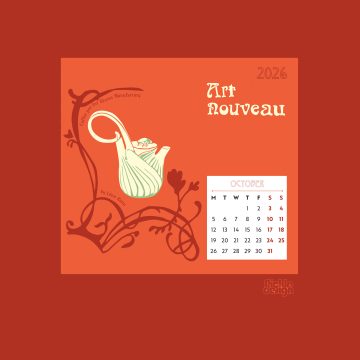
That connection has taken us neatly back to Thonet again here at Pickle. For our 2026 Art Nouveau calendar, we illustrated twelve objects and designs from the period – and April could only really belong to a Thonet bentwood chair.
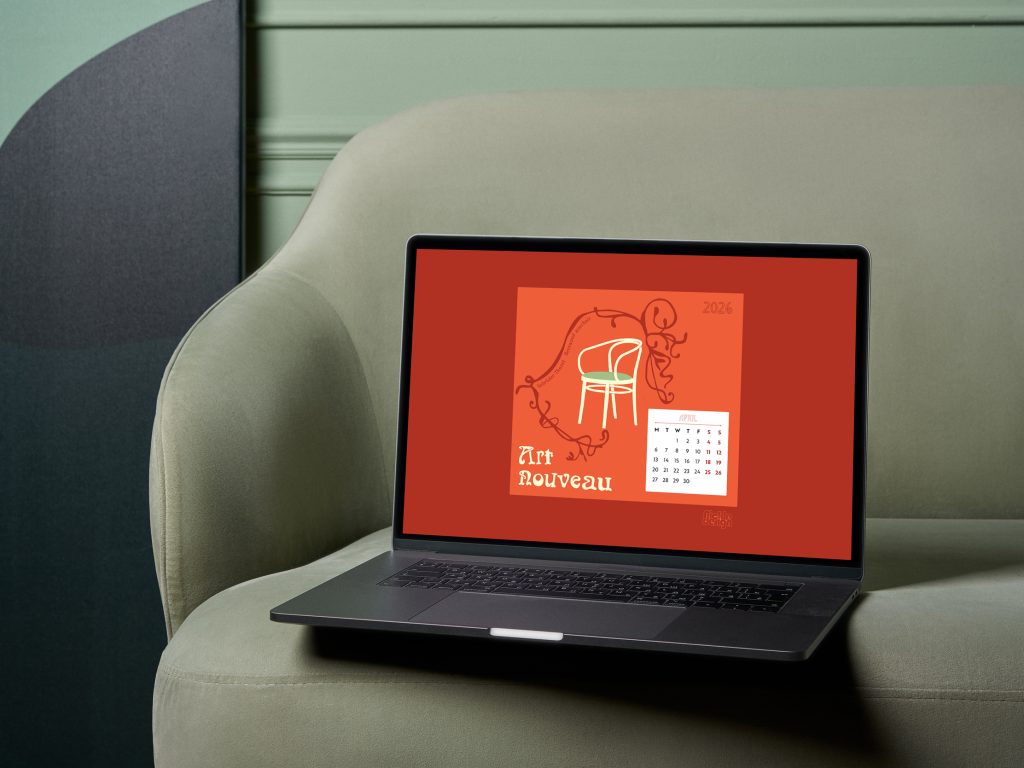
More than 175 years after Café Daum, there is something rather wonderful about the fact that those deceptively simple curves still look completely at home. The technology was revolutionary, but perhaps the real mark of the design is that you do not need to know any of that to appreciate it.
Emma has also taken a closer look at the timeless design of Thonet’s bentwood chairs on Design Debate.
This article began life in our June 2017 newsletter and was expanded in August 2026. You can view the original ‘Somewhere to hang your coat’ newsletter as a PDF, or find out more about Pickle Design’s newsletters.