Journal topics
- Art (60)
- From the Studio (44)
- Architecture (38)
- Graphic Design (37)
- Interiors (37)
- Illustration (32)
- Product Design (31)
- Photography (29)
- Fashion (11)
- Design Classics (9)
Creating a Ruin
I love this project, mainly because it reminds me of my dad. Whenever I see gabion walls I think of him. He was a civil engineer, and he would point them out and tell me how early he had adopted them in his own projects. When I first wrote this in 2022, it hadn’t even been a year since he died, and I was finding it was the little things he had taught me to notice that I cherished most. So every viaduct, detailed manhole cover and embankment seemed to take on a new beauty.
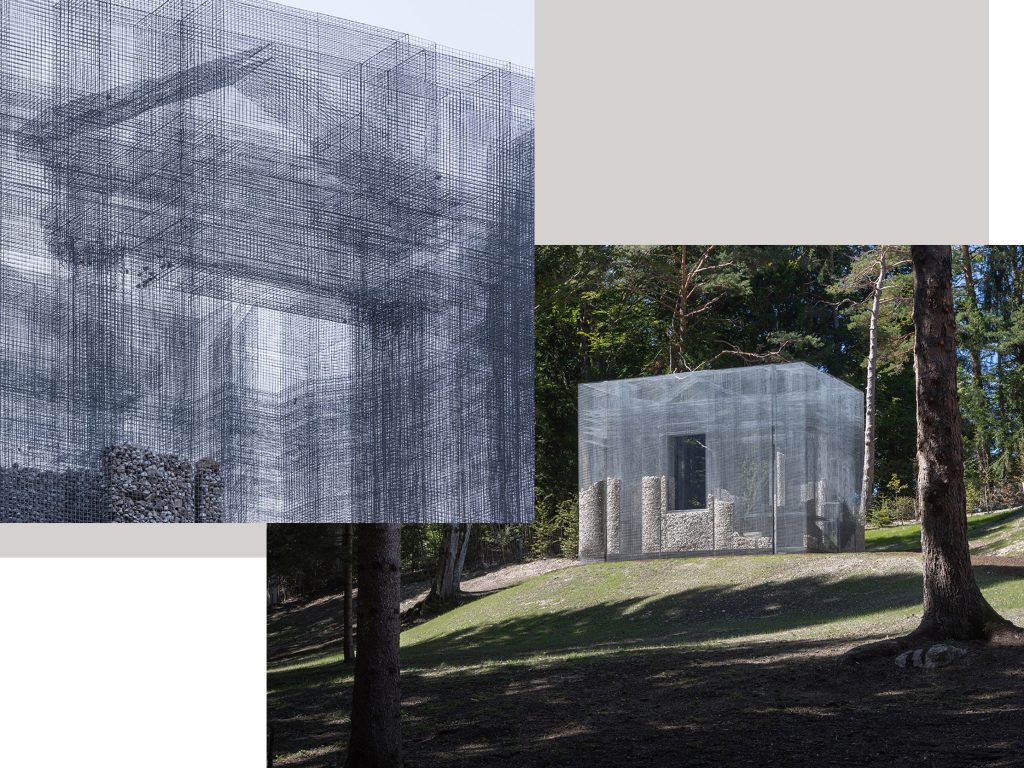
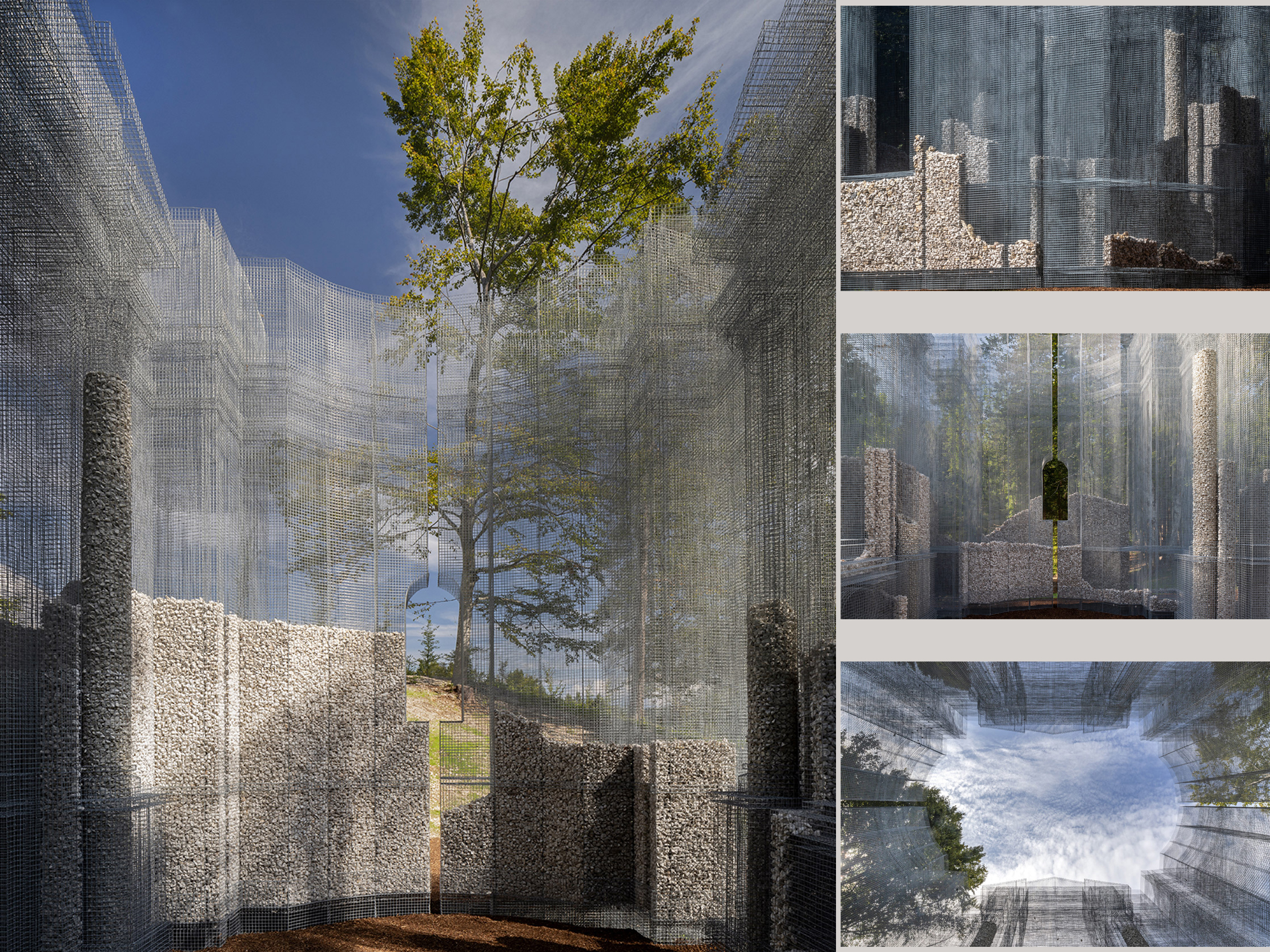
This installation by Italian artist Edoardo Tresoldi is called Simbiosi. Created for Arte Sella in 2019, it immediately made me think of those simple cages packed full of rocks. Tresoldi is known for creating architecture in wire mesh, structures that can look almost like drawings of buildings floating in the landscape. With Simbiosi, though, he introduced local stone into the work, bringing something solid and heavy into his usually transparent architecture.
A ruin that was never there
The idea becomes even more interesting when you realise that this isn’t the remains of an old building at all. Simbiosi was designed as a ruin from the beginning.
Normally a ruin starts as something complete and slowly loses its walls, roof and detail to time. Tresoldi almost reverses that process. His five-metre-high structure is open to the sky and gives us just enough architecture to imagine what might once have stood there, even though there never was an original building.
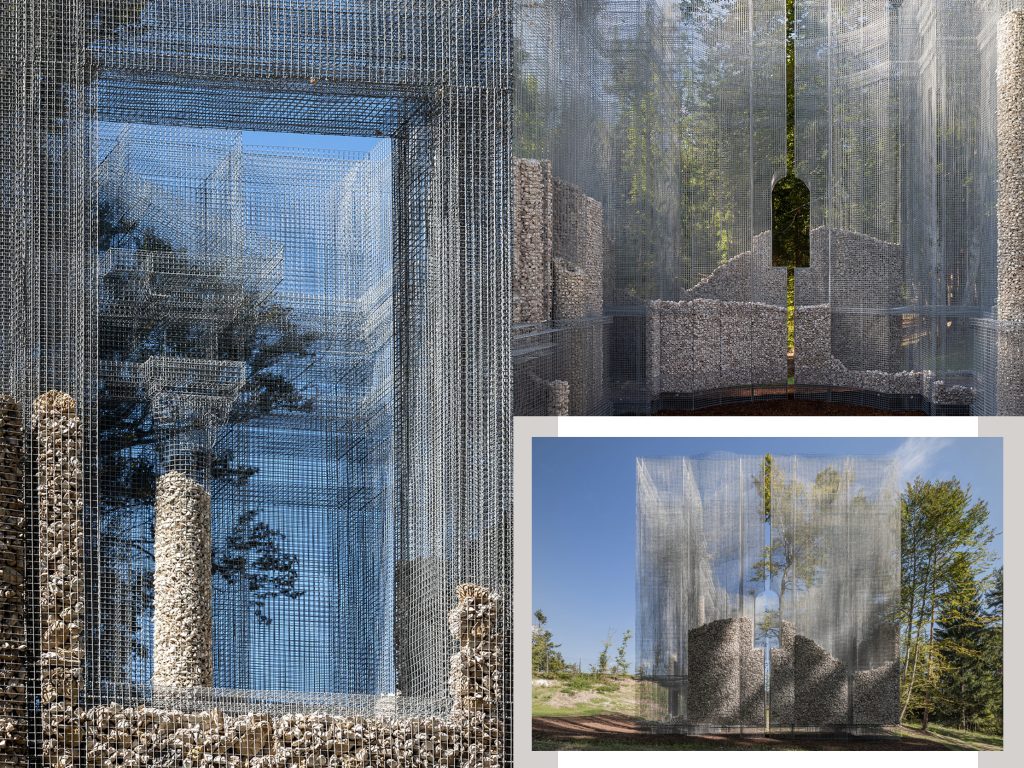
It’s a beautiful idea. The metal framework hints at what was, or perhaps what might have been. There are echoes and shadows of classical forms, but the walls don’t really shut anything out. You can gaze straight through them to the trees beyond, so nature provides its own towers, columns and changing backdrop.
Solid and almost weightless
That contrast is probably what I like most about it. The stone feels permanent, ancient and incredibly heavy, while the wire mesh around it seems barely there. One part looks as though it could have survived for centuries, while the other seems as if it might disappear when the light changes.
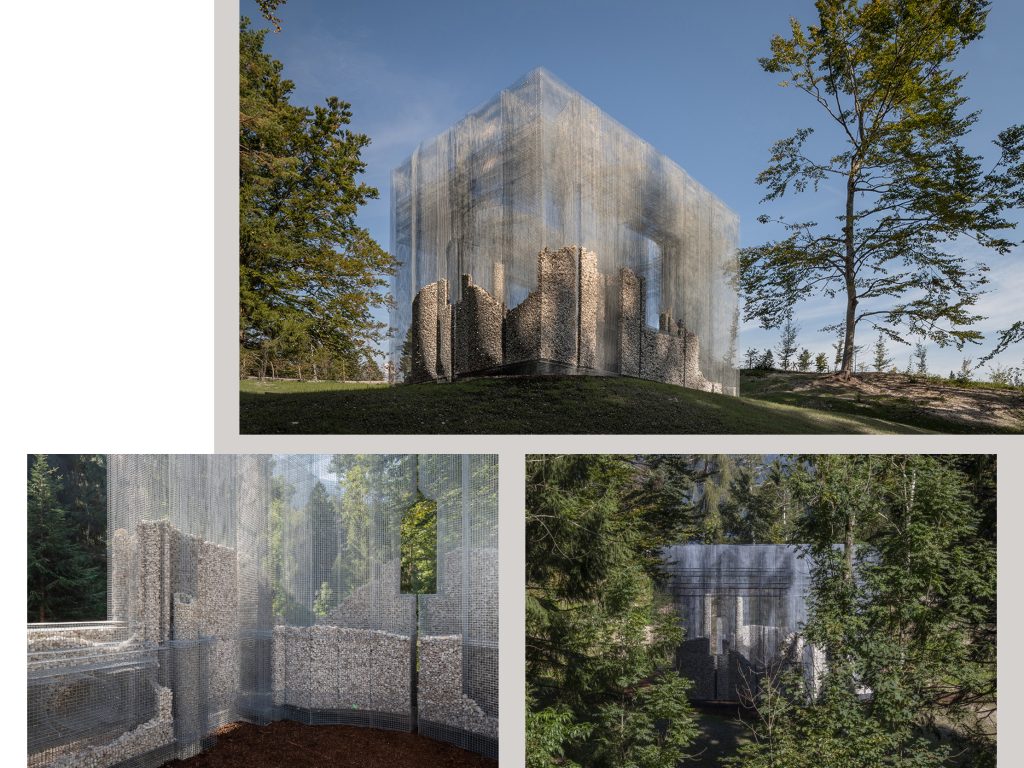
Tresoldi describes the work as a “character within the landscape, embodying the idea of dying architecture in the collective imagination”. That seems just right. It feels architectural, but not quite like a building; ancient, but newly made; substantial and strangely fragile at the same time.
Architecture shaped by nature
It also belongs particularly well at Arte Sella, a sculpture park where art and the natural landscape are intended to change together. The hill on which Simbiosi stands was itself shaped by the storm that transformed the park, and Tresoldi sees the slow growth of nature around the installation as another architecture that will continue to develop over time.
That makes the idea of a ruin even more interesting. Rather than putting a finished object into the landscape and expecting it to stay exactly as it is, the work allows time, weather and growth to become part of it.
Why it stayed with me
I love that something as simple as metal and stone can look so grand and so fragile all at once. There is nothing precious about either material, but put together like this they become something almost dreamlike.
Perhaps I love it because it makes me notice the same things my dad did too: structure, materials and the ingenuity of holding something together. A gabion wall is still a gabion wall, but sometimes it can become a ruin, a sculpture, or just a small reminder of someone.
I first came across Simbiosi on Yellowtrace. You can also see more of the project on Edoardo Tresoldi’s website and learn more about the setting at Arte Sella.